Ants in the House in Winter
Where do ants go in the winter, and why are some still in your kitchen in January? What winter ants usually mean, especially big black carpenter ants.
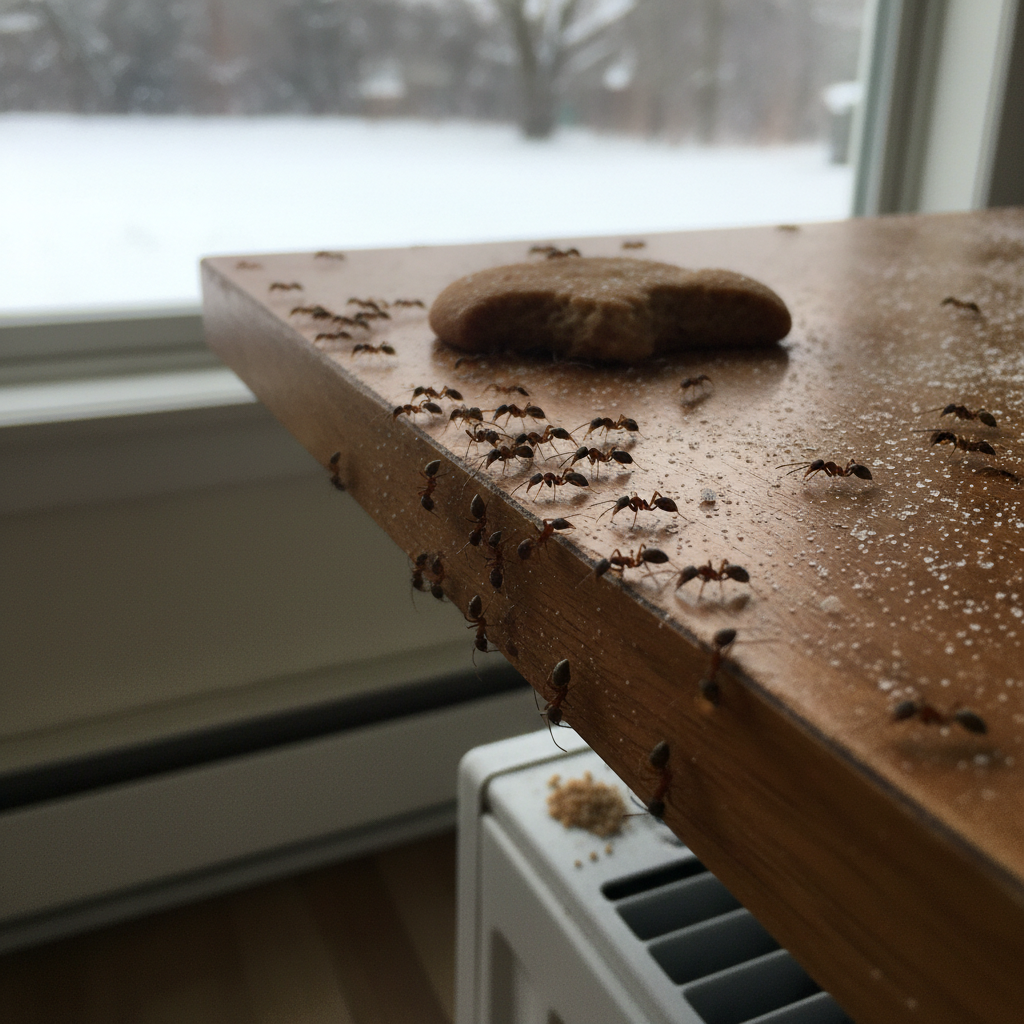
Most ants in New Jersey slow down and go quiet in winter. Colonies outside move deeper into the soil or into stumps and logs and wait for spring. So if you're seeing ants in your house in December or January, it's worth paying attention. They're probably not coming in from outside. They're likely living in the house.
Where do ants go in the winter?
Ants don't die off in the cold, and they don't really hibernate. Outdoor colonies cluster together deep in the ground or inside wood, where the temperature stays steadier, and they barely move until it warms up. That's why you don't see trails across the patio in February.
An ant nest inside a heated house doesn't get that signal. The walls stay warm, and the colony keeps working.
Big black ants in winter: carpenter ants
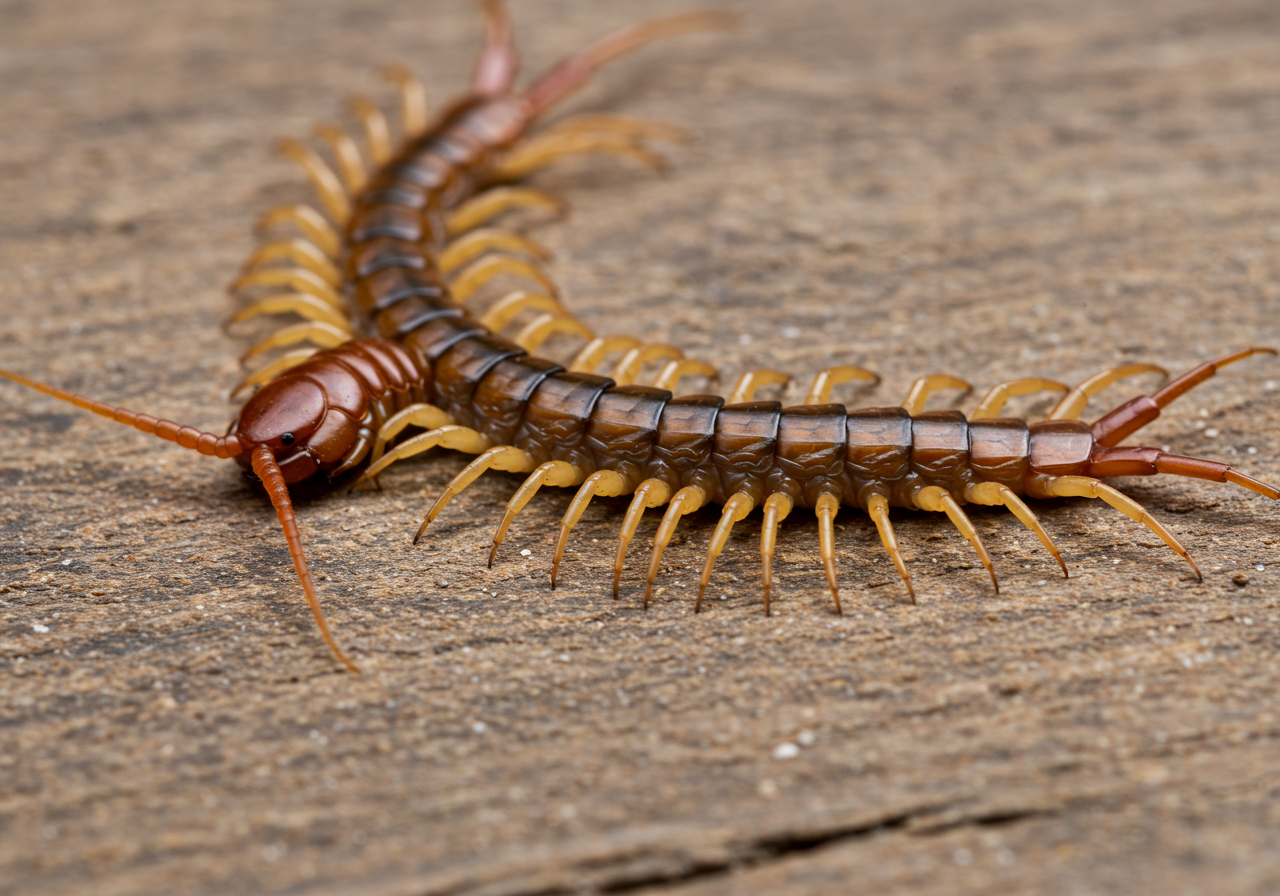
If the ants you're finding are large, black or black-and-red, and about a quarter inch to a half inch long, they're probably carpenter ants. This is the one to take seriously.
Iowa State University Extension puts it plainly: carpenter ants found indoors in winter usually come from a nest somewhere inside the house. That nest might be in a wall, under a window, in a door frame or in roof framing, usually where wood has gotten wet.
Carpenter ants don't eat wood the way termites do. They hollow it out to make room for the nest and push the sawdust out. Finding small piles of coarse sawdust near baseboards, windows or in the basement is one of the best clues to where the nest is.
Flying ants in winter
Winged ants inside in late winter are a strong sign of an indoor colony. A colony only produces winged swarmers once it's established. If they're coming out inside your house, the colony is inside your house.
Not sure if they're ants or termites? Our guide to flying ants vs. carpenter ants shows how to tell them apart by the wings and waist.
Smaller ants in winter
Small brown or black ants in the kitchen in winter are usually a species that can nest in walls or under a heated slab floor. They're more of a nuisance than a threat to the house, but they still mean there's a nest close by.
What to do
- Don't spray the trail. Spraying kills the ants you see, not the nest they're coming from.
- Note where and when you see them. Ants coming from the same window or bathroom wall point toward the nest.
- Look for moisture. Leaky windows, plumbing leaks, ice dams and wet sill plates are where carpenter ants like to nest.
- Look for sawdust near baseboards, under windows and in the basement or crawl space.
Why the nest matters
The best carpenter ant control comes from finding and treating the nest, indoors or out. Fixing the moisture problem that drew them there keeps them from coming back. That's very different from spraying where you see the ants.
That's how our carpenter ant control service works: find the nest, treat it, and point out the moisture issues that need fixing. For smaller ants, see ant control. Call (732) 527-5770.
Common questions
Do ants die in the winter? No. Outdoor colonies go dormant and wait out the cold.
Why do I have ants in my house in winter? Usually because they're nesting inside the house, where it stays warm.
Are carpenter ants in winter a bad sign? They usually mean a nest inside the structure, often in wet wood. It's worth having it looked at.
Request a Pest Control Quote
Tell us what you're seeing and our team will call you to go over it. Most routine services are quoted over the phone. Termite work requires a paid inspection, and bed bug and roach jobs get a price range that's confirmed once we see the problem. New customers get 10% off their first service.
More Blogs
Some other blogs you might be interested in