Carpenter Ant Control in Ocean & Monmouth County, NJ
Carpenter ants hollow out damp wood in decks, window frames and walls. We track down where they're nesting, treat the colony, and show you the wet wood that drew them in.
Carpenter ants at the Jersey Shore
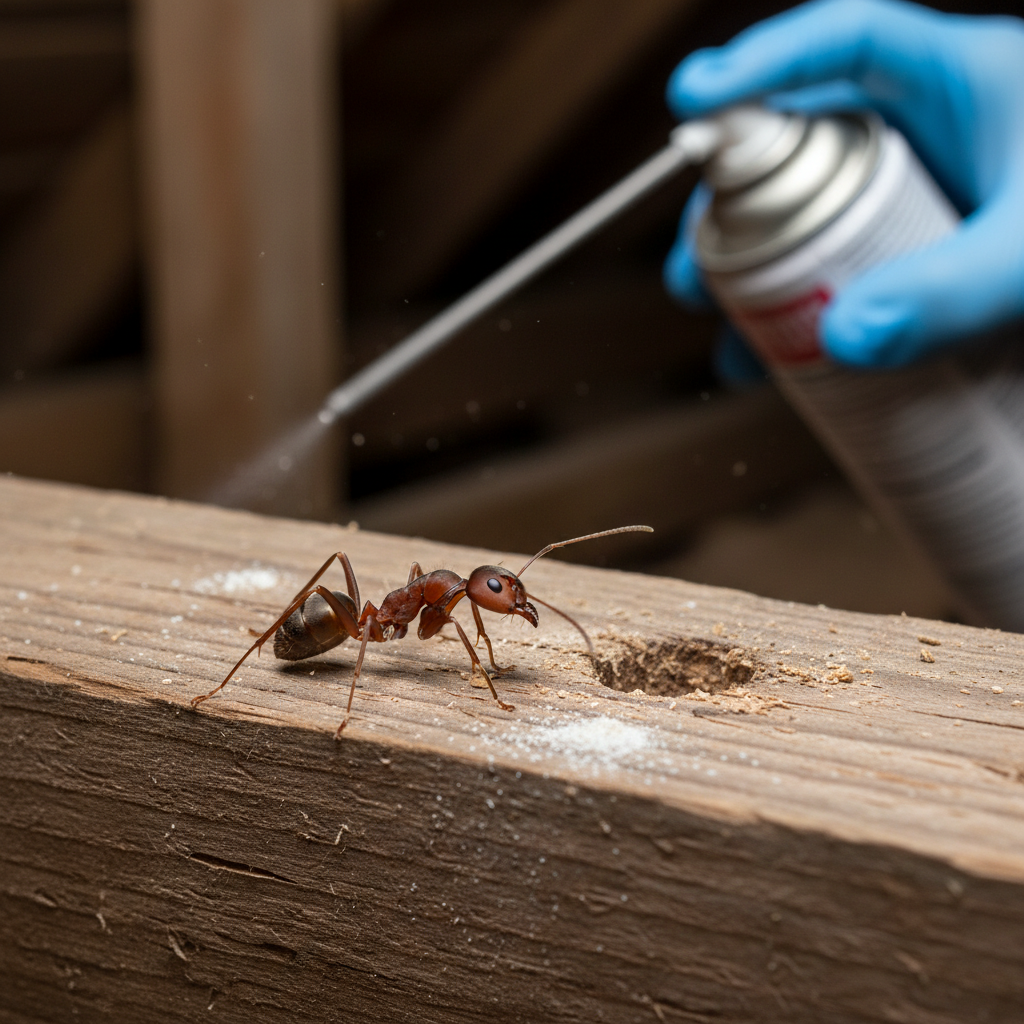
Carpenter ants are the big black ants, often a half inch long or more, that show up in kitchens and bathrooms at night or come out with wings in the spring. They don't eat wood. They chew tunnels through it to nest, and over time those tunnels weaken window frames, sill plates, deck boards and wall framing.
They go after wood that's damp or already soft. That's why we see so many of them in Ocean County and Monmouth County: shore houses, older homes and anything near the water deal with humidity, salt air, leaky windows and decks that never fully dry out.
Signs you have carpenter ants
- Large black ants inside, mostly at night. A few wandering around the kitchen in spring usually means a nest in the house or right next to it.
- Small piles of what looks like sawdust. It's the wood they've chewed out, often mixed with bits of dead insects, under windowsills, along baseboards or below a deck.
- Winged ants in spring. A mature colony sends out swarmers, often near windows. People often mistake them for termites.
- Faint rustling in walls or ceilings. Large colonies can be heard at night.
- Soft or hollow-sounding wood. Around windows, doors, roof edges and anywhere water has gotten in.
Carpenter ants or termites?
Both swarm in spring and both damage wood, but they're different problems. Carpenter ants have a pinched waist, bent antennae and front wings longer than the back ones, and they leave sawdust. Termites have a thick waist, straight antennae and four equal wings, and they leave mud tubes instead of sawdust. If you're not sure what you have, save one in a bag and we'll identify it. If it turns out to be termites, see our termite control page.
How we get rid of them
Spraying the ants you can see doesn't solve anything, because the colony stays hidden in the wood. We look for where they're nesting and how they're getting in, treat the colony and the trails they use, and point out the damp or damaged wood that drew them in so it can be fixed. Colonies often have satellite nests in other parts of the house, so we check beyond the spot where you first saw them.
For other ants, like the small ones that trail across counters, see our ant control page. To keep carpenter ants and other seasonal pests from coming back, look at our seasonal protection plans.
Call before spring
Carpenter ant activity picks up from March through June, when colonies wake up and send out swarmers. If you saw them last year, the colony is probably still there. Call us at (732) 527-5770.
Stop Carpenter Ants: Get Your Free Quote Today!
Is your home being threatened by carpenter ants? Don't let these destructive pests cause costly damage. Fill out our simple form below, and a friendly expert from Resolve Pest Management will get back to you with a free, no-obligation quote. We'll help you find the best solution to protect your Bayville, NJ home and restore your peace of mind. Get started now!
Behind the success stories
Read why our customers consider us the best pest control company in New Jersey

100% Satisfaction Guaranteed
We are so confident in our work that we offer a 100% satisfaction guarantee. If you are not satisfied with our service, we will come back and retreat your home at no additional cost to you.

Family Owned and Operated
We are a family owned and operated business and we take pride in our work. We understand the importance of a clean and healthy home and we are committed to providing the best service possible.

12
reviews
438
reviews
75
reviews
25
reviewsGot an emergency?
Frequently Asked Questions
Common questions about carpenter ants
No. Carpenter ants don't eat wood. They chew tunnels through it to build their nests and push the shavings out, which is why you'll find small piles of what looks like sawdust. Termites actually eat the wood and leave mud tubes, not sawdust.
Look at the winged ones. Carpenter ants have a pinched waist, bent antennae and front wings longer than the back ones. Termite swarmers have a thick waist, straight antennae and four wings the same length. If you're not sure, save one in a bag and we'll identify it.
Very likely. Carpenter ants forage mostly at night, and the large black ones in New Jersey homes are usually carpenter ants. Seeing a few inside in spring often means there's a nest in the house or close to it.
They go after wood that's damp or already softened. Leaky windows, roof and gutter problems, decks, sill plates over damp crawl spaces, and firewood stacked against the house are the usual starting points. Near the shore, salt air and humidity make it worse.
Over time, yes. A colony can keep expanding its tunnels for years, and colonies often have satellite nests in other parts of the house. Catching them early keeps the damage to a small area.
Other services
Some other service you might be interested in