Do Raccoons Attack People? What to Know About Raccoons in the Attic
Raccoons rarely attack, but they carry real risks. Rabies, roundworm and attic damage, and how raccoons are safely removed in New Jersey.
Hearing heavy thumps and growling in the attic at night? That's often a raccoon. Here's what New Jersey homeowners should know about the risks, and how raccoons are safely removed from attics.
Do raccoons attack people?
Healthy raccoons almost always avoid people. They'll run, hide or bluff, but attacks are rare. The two situations to be careful about:
- A mother with young. She'll defend her litter if she feels cornered, and attics are a favorite place to raise them.
- A sick animal. A raccoon that's out in daylight, stumbling, circling, unusually aggressive or unusually tame may be sick.
The bigger concern is disease, not attacks.
Raccoons and rabies in New Jersey
According to the New Jersey Department of Health, raccoons account for 77% of rabid land animals diagnosed in the state. Raccoon rabies reached New Jersey in 1989 and spread statewide within about three years. Raccoons are a rabies vector species here, which is why you should never try to handle one.
If you're bitten or scratched, the Department of Health says to:
- Wash the wound right away with soap and plenty of water.
- See your doctor or go to the emergency room.
- Note what the animal looked like and where it went, and call animal control if it's safe.
- Report it to your local health department.
Raccoon droppings: the hidden risk
Raccoons use the same spots as a toilet, called latrines, often in attics, on roofs and decks, and in woodpiles. According to the CDC, their droppings can carry raccoon roundworm eggs, which you can't see.
Don't clean up a raccoon latrine with bare hands or a broom. The CDC recommends disposable gloves, an N95 respirator in tight spaces like attics, misting the area to keep dust down, and bagging the material. Heat kills the eggs; most household chemicals don't.
Why raccoons move into attics in winter and spring
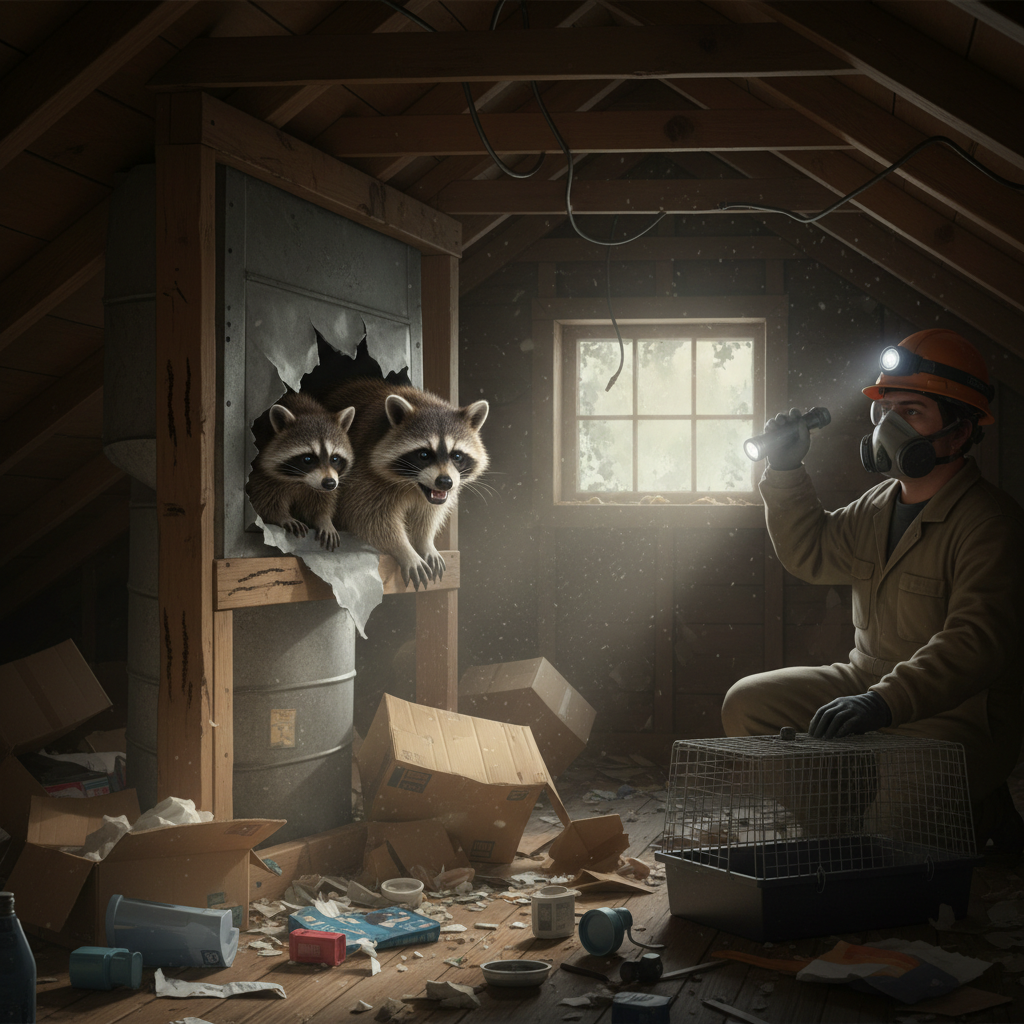
Raccoons breed mainly in February and March, and most litters are born in April or May, according to Nevada Department of Agriculture's wildlife guide. Females look for a warm, protected den to raise them, and an attic or an uncapped chimney works well. They can tear off shingles, soffits or fascia boards to get in.
That timing matters. If you seal a raccoon out while her young are still inside, she'll tear her way back in, or the young will die in the attic.
How to get raccoons out of the attic
- Confirm it's a raccoon. Heavy footsteps at night, chattering, torn soffits or roof vents, and droppings on the roof are the signs.
- Check for young before anything gets sealed.
- Remove the raccoons humanely. New Jersey's wildlife relocation policy prefers release on the property where they were caught, and it limits how far adults can be moved if that isn't possible. It's not a do-it-yourself job.
- Seal every opening with heavy-gauge materials once they're out, and cap the chimney.
- Clean up the latrine safely and replace damaged insulation if needed.
How to keep raccoons away
- Use trash cans with locking lids, and bring pet food in at night.
- Cap the chimney with a sturdy metal cap.
- Trim branches that hang over the roof.
- Repair loose shingles, soffits and vents before late winter.
Raccoon removal in Ocean and Monmouth County
We inspect the roof line, check for young, remove the raccoons, and seal the house so they can't come back. See raccoon removal or call (732) 527-5770. Not sure what's in the attic? Read scratching noises in your walls or ceiling.
Common questions
Do raccoons attack humans? Rarely. Healthy raccoons avoid people. Be careful around a mother with young or any raccoon acting sick.
Is it dangerous to have a raccoon in the attic? Yes. Raccoons can carry rabies, their droppings can carry roundworm, and they damage insulation, wiring and roofing.
When do raccoons have babies? Most litters are born in April or May.
Can I trap a raccoon myself in NJ? Raccoons are a rabies vector species, and the state limits where they can be released. It's safer to have a professional handle it.
Request a Pest Control Quote in Bayville, NJ
Tell us what you're seeing and our team will call you to go over it. Most routine services are quoted over the phone. Termite work requires a paid inspection, and bed bug and roach jobs get a price range that's confirmed once we see the problem. New customers get 10% off their first service.
More Blogs
Some other blogs you might be interested in