Centipede Identification & Control for New Jersey Homes
Worried about centipedes in your Ocean or Monmouth County home? Our complete guide helps New Jersey homeowners identify common centipede characteristics, understand their habits, and learn effective prevention tips. Discover when to call Resolve Pest Management for expert centipede control and pest solutions tailored for your NJ property.
Identifying Common Centipede Characteristics: Your Complete Guide for New Jersey Homeowners
Centipedes are intriguing, elongated creatures that sometimes find their way into our homes, typically seeking out prey and moisture. For homeowners in New Jersey, particularly in coastal areas like Ocean and Monmouth Counties, knowing how to properly identify these multi-legged visitors is the crucial first step toward effective pest management. This comprehensive guide is designed to equip you with practical centipede identification and safety knowledge.
We’ll walk you through what centipedes look like, how they differ from their millipede cousins, their preferred hiding spots in properties across the Garden State, and what to expect if you experience a bite. Our goal is to provide clear visual cues—like body shape, leg arrangement, antennae, and specialized forcipules—along with insights into their behavioral patterns and the seasonal factors that influence indoor sightings here in New Jersey. You'll also learn essential first-aid steps for bites, proactive prevention strategies, and gain guidance on when professional intervention might be needed versus a DIY approach. Finally, discover localized prevention tips tailored for our unique New Jersey homes, and clear guidance on when to consider professional Centipede Control Services or broader Pest Control Services from a trusted local provider like Resolve Pest Management. We've integrated key terms like "centipede identification," "house centipede appearance," "centipede control methods," and "centipede prevention tips NJ" to ensure this guide is both relevant and highly useful.
What Are the Key Physical Characteristics of House Centipedes?
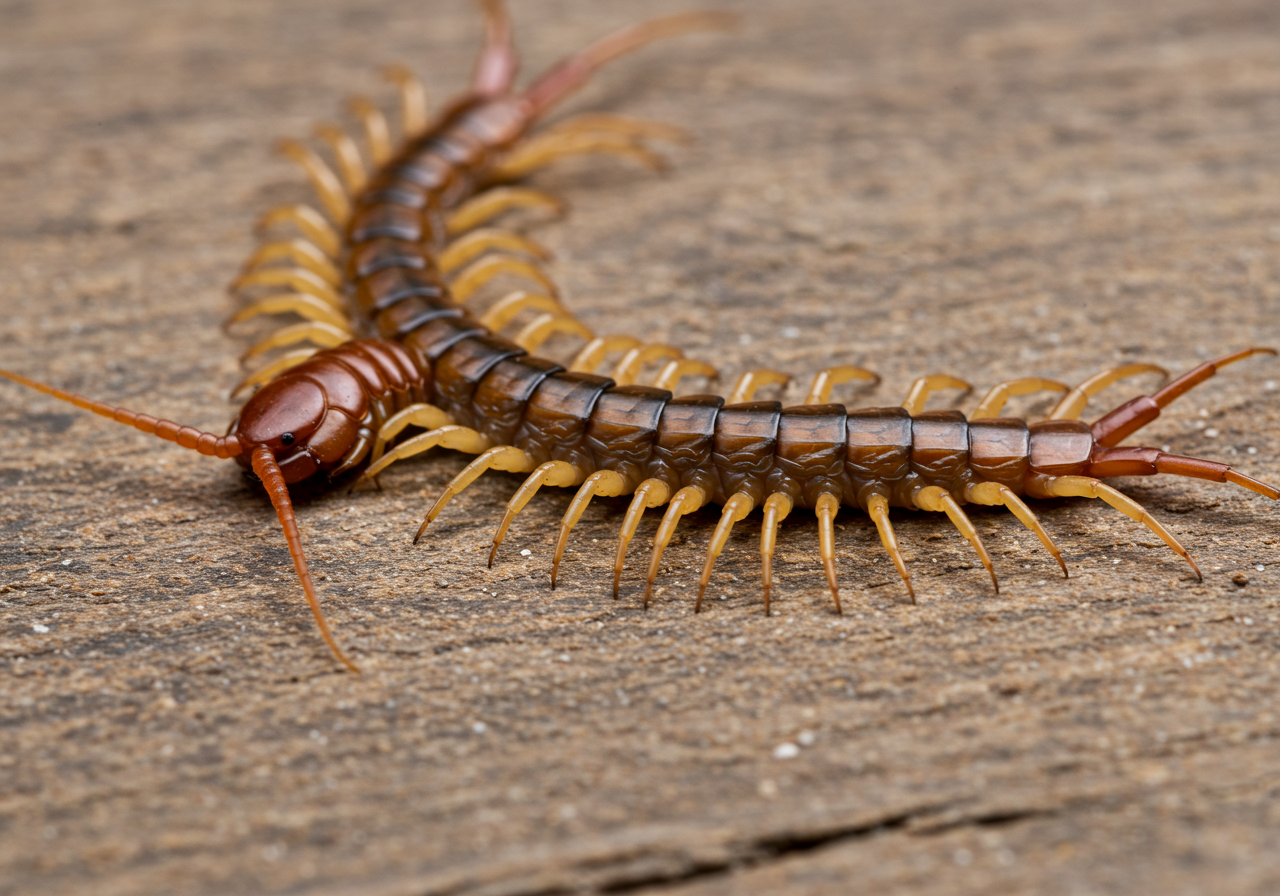
The house centipede (Scutigera coleoptrata) is a distinctive, multi-segmented arthropod, recognized by its elongated body, numerous paired legs, and specialized forcipules used for capturing prey. This unique body design allows for incredibly fast movement and creates a striped appearance that helps homeowners quickly identify them. Their efficient morphology enables them to hunt small arthropods indoors, resulting in rapid bursts of locomotion and the visual impression of many legs trailing behind a relatively narrow body. For New Jersey residents, recognizing this combination of a flattened body, long antennae, visible leg pairs, and banded coloration makes it easy to differentiate them from other household pests.
Below, you'll find a quick-reference table summarizing the most visible attributes of a house centipede. This table provides a concise overview of the most helpful identification traits for quick homeowner recognition.
| Feature | Attribute | Typical Description |
|---|---|---|
| Body length | Measurement | 1–1.5 inches (body only), 2–3 inches including legs |
| Coloration | Pattern | Yellowish-gray with distinct dark dorsal stripes |
| Legs | Count/appearance | Many long legs, appearing brush-like and extending well beyond the body |
| Distinct parts | Notable anatomy | Prominent antennae and terminal forcipules for prey capture |
This quick-reference table highlights the primary visual cues to check first: size, stripes, legs, and specialized mouthparts, all of which contribute to a confident identification.
What Does a House Centipede Actually Look Like?
A house centipede presents as a slender, flattened arthropod, featuring a segmented body and an impressive array of long, delicate legs that create a fringed appearance and enable its remarkable speed. Its typical coloration ranges from pale yellow to gray, often adorned with darker longitudinal stripes or bands along its back. This pattern accentuates its segmented look and helps distinguish it from other plain-colored myriapods. In terms of size, the body itself usually measures around an inch or slightly more, but its legs extend its visual length considerably, often reaching two to three inches overall. When observing one, pay attention to the prominent antennae extending from its head and the last pair of legs, which are often longer and serve as crucial sensory aids during hunting.
How Many Legs Do House Centipedes Have, and What Makes Them Unique?
Adult house centipedes possess 15 pairs of legs, with one pair per body segment after the head. This is a key distinction from millipedes, which have two pairs per segment, and it explains both the common misconception of "100 legs" and the centipede's impressive agility. Each successive body segment supports a single pair of legs that progressively increase in length towards the rear, creating that characteristic fan-like silhouette and facilitating high-speed locomotion when they're chasing prey or evading threats. This evolutionary advantage is clear: long, mobile legs enhance stride length and sensory feedback, allowing the centipede to detect vibrations and quickly close in on prey like insects and spiders. For homeowners, counting the visible leg pairs and noting the single-pair-per-segment arrangement is a reliable diagnostic feature when differentiating centipedes from other garden or house arthropods.
What Are Antennae and Forcipules on a Centipede?
Antennae and forcipules are two distinct anatomical structures on centipedes that serve crucial sensory and predatory functions, respectively. The antennae are responsible for detecting chemical and tactile cues, while the forcipules deliver venom to subdue prey. Antennae emerge from the head as long, segmented appendages, acting as primary sensory organs that guide their nocturnal hunting and navigation in dimly lit indoor spaces. Forcipules, on the other hand, are modified front legs located just behind the head. They function as pincer-like, venom-delivering structures. While highly effective against small arthropods, their venom typically causes only mild pain to humans. Recognizing these parts helps homeowners understand why centipedes move with such purpose and why handling them is best avoided. Spotting prominent antennae and visible forcipules is a clear indicator of a predatory centipede, rather than a harmless detritivore.
Centipede Forcipules: Venom Claws and Morphology The most conspicuous feature shared by all centipedes is the post-cephalic segment bearing a pair of strong venom claws. These claws are essentially modified front legs that have evolved into pincer-like tools for capturing and injecting venom into their prey.
How Can You Differentiate Centipedes from Millipedes?
Centipedes and millipedes occupy entirely different ecological niches and display contrasting physical and behavioral traits, which directly impacts how homeowners should respond. Centipedes are flattened, swift predators with one pair of legs per segment, whereas millipedes are rounded, slow-moving detritivores with two pairs per segment. This fundamental distinction is vital for effective control: centipedes often indicate the presence of other prey and moisture, while millipedes typically signal decaying organic matter and generally pose no biting risks to people. This is a common point of confusion, with an estimated 70% of homeowners initially mistaking one for the other.
A concise comparison table below clarifies the most actionable differences for identification and appropriate response in residential settings. This side-by-side table empowers homeowners to quickly classify any encountered myriapods and choose the most suitable measures.
| Characteristic | Centipede | Millipede |
|---|---|---|
| Body shape | Flattened | Cylindrical/rounded |
| Leg pairs per segment | One pair | Two pairs |
| Movement | Rapid, agile hunter | Slow, coils defensively |
| Diet | Carnivorous (insects, spiders) | Detritivorous (decaying plant matter) |
| Defense | Bites or fast retreat | Coiling and chemical secretions |
This comparison clearly illustrates why centipedes often suggest active predation indoors and may require different exclusion tactics than the moisture- and litter-focused approaches effective for millipedes.
What Are the Main Differences in Body Shape and Legs?
The primary morphological differences between centipedes and millipedes lie in their cross-sectional body shape and leg arrangement. Centipedes are laterally flattened with one leg pair per segment, creating a distinctive staggered row of long legs. Millipedes, conversely, are more cylindrical with two leg pairs per segment, resulting in a denser, shorter-legged appearance. These structural variations translate into easily recognizable silhouettes: centipedes present a wide, brush-like fringe, while millipedes resemble compact, many-segmented cylinders. From a homeowner's perspective, observing whether the creature moves quickly with elongated legs splaying outward, or rolls up and moves slowly with numerous short legs tucked beneath its body, will reliably indicate which group is present. Accurate visual diagnosis helps determine whether to focus on moisture reduction and debris removal or to inspect for the prey populations that sustain centipedes.
How Do Movement and Behavior Differ Between Centipedes and Millipedes?
Behaviorally, centipedes are active, nocturnal hunters that rapidly traverse surfaces to locate prey, whereas millipedes are slow-moving detritivores that prefer to remain in moist, sheltered areas and typically coil defensively when disturbed. This stark behavioral contrast offers a practical field cue: a hurried animal that darts away from light or into cracks is likely a centipede, while a sluggish crawler that curls up is almost certainly a millipede. Recognizing these activity patterns helps in developing effective monitoring strategies—look for nocturnal sightings, observe movement speed, and note their reaction to light or disturbance. Understanding these behavioral differences directly leads to more effective monitoring and targeted remediation steps within your home.
What Are the Differences in Diet and Defense Mechanisms?
Dietarily, centipedes consume live arthropod prey such as spiders, silverfish, and small insects, utilizing their forcipules to immobilize their meals. Millipedes, on the other hand, feed on decaying plant material and rely on coiling and chemical secretions as their primary defenses. The predatory role of centipedes means their presence often correlates with other pest populations inside homes, so controlling those prey species can significantly reduce centipede activity. Millipedes, by contrast, indicate environmental conditions with ample organic matter and moisture, and while their secretions can cause mild skin irritation, they rarely lead to systemic reactions. Knowing these ecological roles ensures homeowners apply the correct corrective actions—focusing on prey reduction and exclusion for centipedes versus habitat cleanup for millipedes.
What Are the Common Habits and Habitats of Centipedes in New Jersey Homes?
Centipedes thrive in damp, cool, and sheltered microhabitats where prey is abundant. This makes basements, bathrooms, crawlspaces, and exterior harborage like mulch and woodpiles prime locations in New Jersey homes. By reducing moisture and prey availability, you can achieve practical control benefits. Their nocturnal hunting activity means they conceal themselves during the day in cracks, behind baseboards, or under clutter. The coastal humidity prevalent in Ocean and Monmouth Counties can further enhance indoor suitability for these predators. Homeowners will find significant value in focusing their inspection and prevention efforts on moisture sources, potential prey harborage, and entry points, as targeted fixes effectively reduce both centipede shelter and their food supply.
The following list highlights the most common indoor and immediate exterior spots to inspect. Prioritize your remediation efforts by inspecting these typical hiding places effectively.
- Basements, crawl spaces, and unfinished areas where humidity levels are higher.
- Bathrooms, laundry rooms, and under-sink cabinets that experience periodic moisture.
- Exterior zones such as mulch beds, leaf litter, stacked firewood, and foundation plantings.
- Cracks in foundations, gaps around doors and windows, and vent openings that provide easy entry paths.
Regular inspection and diligent moisture control in these areas often reveal early signs of centipede activity, preventing escalation and naturally leading into an understanding of their prey preferences and nocturnal hunting behavior.
Where Are Centipedes Most Commonly Found in NJ Homes?
Centipedes are most frequently encountered in damp interior spaces like basements, crawl spaces, bathrooms, and under sinks, as well as immediately adjacent exterior sites such as mulch, leaf litter, and woodpiles that offer both shelter and prey. These microhabitats provide the humidity centipedes need to avoid desiccation and concentrate the small arthropods they feed upon, creating localized hotspots of activity near foundation walls and entry points. Coastal and suburban properties in Ocean and Monmouth Counties often feature dense landscaping and higher ambient humidity, which increases the likelihood of indoor incursions. Inspecting these prioritized areas for both centipedes and their prey allows homeowners to intervene earlier and reduce the overall habitat suitability.
What Do Centipedes Eat in Residential Environments?
Centipedes primarily prey on small arthropods commonly found in homes, including spiders, silverfish, cockroaches, and other insects. Their presence often signals an existing population of these prey species that sustains centipede activity. By consuming common household pests, centipedes can indirectly indicate where improved sanitation or integrated pest management measures are needed. Eliminating these source populations—through trapping, exclusion, and cleanliness—effectively reduces the centipede food supply and diminishes indoor sightings. Addressing prey species, therefore, serves as both a direct pest-control step and a long-term centipede prevention strategy.
Are Centipedes Nocturnal, and How Does This Affect Sightings?
Centipedes are primarily nocturnal hunters, meaning most of their activity occurs after dusk when they actively search for prey. This explains why homeowners frequently encounter them at night or find them sheltered during daylight hours. This nocturnal pattern suggests that daytime sightings might indicate a heavy or disturbed population, warranting a closer inspection of harborage and moisture sources. Practical observation strategies include checking likely harborage areas with a flashlight at night and monitoring for shed exoskeletons or prey remains as indirect evidence of activity. Recognizing their nocturnal behavior helps homeowners prioritize monitoring and schedule mitigation efforts during peak activity periods.
How Does New Jersey’s Climate Influence Centipede Activity?
New Jersey’s seasonal humidity and temperature fluctuations significantly influence centipede movement into homes. Higher coastal humidity in Ocean and Monmouth Counties generally favors outdoor survival but often drives more indoor movement during dry or colder months when centipedes seek stable moisture and prey. Heavy rainfall, seasonal storms, and landscape irrigation can increase ground moisture and prey availability, boosting local centipede populations and raising the chance of indoor incursions. Conversely, winter cooling may push centipedes into heated structures where humidity pockets persist. Understanding these seasonal dynamics empowers homeowners to time preventive measures—such as dehumidification and exterior moisture control—to effectively reduce indoor encounters.
What Are the Symptoms and Risks of Centipede Bites?
A centipede bite typically results in localized puncture pain, redness, and swelling due to the mild venom injected by their forcipules. Understanding these common symptoms and appropriate first-aid responses helps minimize unnecessary alarm while also identifying any red flags that might require medical attention. Most reactions are short-lived and resolve with basic wound care, but vulnerable individuals may experience stronger responses, making careful monitoring a prudent step. This section outlines typical bite presentations, clear indications for seeking medical help, and stepwise at-home treatment to reduce potential complications.
The following numbered list provides immediate first-aid steps for suspected centipede bites. Follow these steps promptly to effectively manage symptoms and reduce the risk of infection or allergic reaction.
- Clean the area thoroughly: Wash the bite with soap and water to minimize infection risk.
- Apply cold therapy: Use a cold pack to reduce pain and swelling for 10–15 minutes.
- Consider OTC medication: Take an over-the-counter analgesic or antihistamine as directed by label instructions.
- Monitor closely: Watch for increasing redness, spreading swelling, fever, or breathing difficulties, and seek medical care if any of these occur.
These practical steps effectively address most minor centipede bites and establish clear criteria for escalating to professional medical care if necessary.
What Does a Centipede Bite Look and Feel Like?
A centipede bite typically appears as one or multiple small puncture marks, accompanied by immediate, sharp pain, localized redness, and varying degrees of swelling. These symptoms often subside over several hours to a few days. Transient numbness or localized tingling can occur, and in some cases, mild bruising or tenderness may persist as inflammation resolves. The mechanism involves venom injected via thecipules, which effectively immobilizes small prey but usually produces only mild effects in humans; severe systemic symptoms are quite rare. Accurate identification of these signs helps distinguish a centipede bite from allergic reactions or infections and guides appropriate home care steps.
When Should You Seek Medical Attention for a Centipede Bite?
You should seek medical attention if bite symptoms escalate beyond localized pain and mild swelling. Specifically, if you observe spreading redness, increasing pain, fever, any signs of infection, or systemic allergic reactions such as difficulty breathing, dizziness, or widespread hives, it's time to consult a professional. Vulnerable populations, including young children, the elderly, or immunocompromised individuals, should obtain prompt medical evaluation even for more pronounced local reactions. These red flags indicate a possible secondary infection or an uncommon systemic response and warrant evaluation by a healthcare professional. Knowing when to escalate prevents complications and ensures timely treatment.
Centipede Bites and Infestations: Medical and Dermatological Considerations While most centipede bites require only supportive care, it's important to be aware that certain individuals, especially children, can have varying reactions. While less common than insect bites, centipede bites can contribute to skin findings. The primary concern is local irritation, but observing for any unusual systemic reactions or signs of infection is always prudent.
What Are the Recommended First Aid Treatments for Centipede Bites?
Initial first aid for a centipede bite focuses on thorough wound cleansing, applying cold to limit swelling, and symptomatic relief with appropriate over-the-counter analgesics and antihistamines as needed, followed by close monitoring for any signs of infection or allergic response. After cleaning, applying an antiseptic and covering the wound can help reduce the risk of contamination, while intermittent icing assists with pain control and inflammation. If symptoms worsen or do not improve within 48–72 hours, it's advisable to contact a medical provider for further evaluation, which may include additional wound care or antibiotics for infection. These stepwise measures typically resolve minor bites without the need for further intervention.
Are Centipede Bites Dangerous or Venomous to Humans?
Centipede bites are indeed venomous, as their forcipules inject enzymes and toxins effective against small prey. However, for most humans, these bites are painful but generally not life-threatening, with serious systemic reactions being quite rare. The clinical consensus indicates that most individuals recover with simple first-aid measures; nonetheless, allergic reactions or exaggerated local inflammation can occur and may require medical attention. For pets, bites may cause localized pain and behavioral changes, and veterinarians should be consulted if symptoms are severe or persist. This perspective aims to reassure readers while underscoring appropriate caution for vulnerable cases.
How Can You Prevent and Control Centipede Infestations in Ocean and Monmouth Counties, NJ?
Effective prevention strategies focus on moisture control, sealing entry points, reducing prey populations, and making landscape adjustments to eliminate harborage. Together, these actions reduce habitat suitability and remove the ecological drivers that draw centipedes indoors. Implementing Integrated Pest Management (IPM) principles—which involve inspection, identification, exclusion, prey reduction, and monitoring—provides a systematic framework homeowners can follow for sustainable control. It's estimated that proactive exclusion and moisture control can reduce indoor centipede sightings by up to 60-70%.
The decision table below is designed to help homeowners determine which DIY fixes to try and when it's time to call a professional for persistent or widespread issues.
| Problem (Attractant) | Risk | DIY Fix | When to Call a Pro |
|---|---|---|---|
| Excess moisture | High | Use dehumidifiers, repair leaks, improve ventilation | Persistent dampness after fixes |
| Prey abundance | Medium-High | Sanitation, targeted pest traps, store food properly | Recurrent multi-pest infestations (e.g., silverfish, roaches) |
| Exterior harborage | Medium | Move mulch away from foundations, remove woodpiles | Extensive landscaping sources or structural entry points that are difficult to manage DIY |
| Multiple indoor sightings | High | Seal cracks, install door sweeps, monitor with sticky traps | Frequent nocturnal sightings across multiple rooms or discovery of breeding activity |
This table helps you prioritize your actions: start with DIY moisture and exclusion steps, but definitely consider professional assistance when problems persist or appear in multiple areas of your home.
What Home Conditions Attract Centipedes, and How Can You Reduce Them?
Centipedes are strongly attracted to high humidity, cluttered storage areas, and environments rich in prey such as spiders and silverfish. By actively reducing these conditions—through improved ventilation, repairing leaks, and removing piles of organic debris—you directly diminish the suitability of your home as a centipede habitat. Practical measures include running dehumidifiers in basements, ensuring exhaust fans operate effectively in bathrooms and kitchens, elevating stored items off damp floors, and relocating mulch and woodpiles away from your home's foundation. Reducing indoor insect populations through diligent sanitation and targeted non-chemical traps also removes the essential food source that draws centipedes in. Taking these prioritized steps effectively lowers the environmental drivers that lead to repeated incursions.
What Are Effective DIY Prevention Tips for Centipedes?
Effective DIY prevention for centipedes emphasizes exclusion, moisture management, and prey control, all through practical tasks homeowners can implement quickly to reduce sightings and nesting opportunities. Key actions include meticulously sealing foundation cracks and gaps, installing door sweeps, maintaining gutters and downspouts to properly divert water away from your home, running dehumidifiers, and using sticky traps to monitor for insect prey. Regularly decluttering basements and attics, reducing the depth of exterior mulch near foundations, and trimming back vegetation also significantly limit harborage. Consistent application of these measures provides an immediate reduction in centipede-friendly conditions and supports long-term prevention.
When Is Professional Centipede Pest Control Recommended?
Professional centipede pest control is highly recommended when homeowners experience frequent sightings across multiple rooms, recurrent bite incidents, persistent moisture issues that DIY measures cannot resolve, or when underlying prey infestations continue despite homeowner efforts. A professional can conduct a systematic inspection, accurately identify structural vulnerabilities or hidden moisture sources, and design an Integrated Pest Management plan specifically tailored to your property type and the local coastal climate. This is particularly crucial for multifamily buildings, commercial properties, or homes with chronic foundation seepage where targeted treatments and structural corrections are necessary.
How Does Resolve Pest Management Provide Local Centipede Control Services?
Resolve Pest Management proudly provides local Centipede Control Services and related Wildlife Management Services across Ocean and Monmouth Counties, NJ. This includes communities like Toms River, Brick, Lakewood, Bayville, Freehold, Middletown, Howell, and Red Bank, among many others. We offer an inspection-first, IPM-aligned approach that meticulously identifies moisture, prey, and entry routes before recommending any treatments. Our local expertise emphasizes thorough inspection, targeted habitat modification, and ongoing monitoring to effectively reduce centipede harborage, rather than relying solely on blanket chemical applications. This approach aligns perfectly with eco-conscious IPM principles and our S.T.I.N.G. promise – Service, Trust, Initiative, Nurture, and Grit – ensuring you receive top-quality care. Homeowners seeking professional assistance can easily request an inspection to evaluate their specific conditions and review a customized action plan for centipede reduction and prevention. Choosing a locally focused provider like Resolve Pest Management combines invaluable regional knowledge of New Jersey climate patterns with service options that comprehensively address both centipedes and the underlying pests that sustain them, restoring comfort to your home.
What Are the Most Common Centipede Species Found in New Jersey?
New Jersey homeowners most commonly encounter the House Centipede (Scutigera coleoptrata), along with a smaller group of soil- and woodland-associated species that occasionally enter structures. Knowing which species is present is crucial for informing your monitoring and control choices. The house centipede's predatory habits and strong affinity for indoor environments make it the primary species of concern within homes, while other species typically indicate outdoor habitat overlap or temporary incursions.
Short species profiles below will help residents match observed traits to likely species and choose appropriate responses. The following list highlights the most frequently observed species profiles. Use these profiles to accurately match your sightings to likely species and understand the associated control implications.
- House Centipede (Scutigera coleoptrata): Characterized by very long legs, a yellowish-gray body with distinct dark dorsal stripes, and common indoor presence, especially in damp areas like basements.
- Soil and woodland centipedes: Typically have shorter legs, prefer outdoor leaf litter and soil, are usually darker in color, and only occasionally enter indoors, often accidentally.
- Other regional myriapods (like millipedes): Generally non-aggressive, rounded bodies, slow-moving, and signaling high exterior moisture or debris accumulation rather than an indoor pest issue.
These profiles clarify that distinguishing between the house centipede and outdoor species is vital for effectively targeting indoor exclusion and prey reduction efforts.
What Exactly Is the House Centipede?
The House Centipede, Scutigera coleoptrata, is a common predatory myriapod easily recognized by its flattened, segmented body, long radiating legs, and distinct dorsal striping. It commonly inhabits basements and other humid indoor spaces where it actively hunts insects. While its predatory behavior helps control populations of spiders and other small pests (it's often seen as a beneficial predator by some, consuming other common household pests like silverfish and small cockroaches), its presence in living spaces often alarms residents due to its unique appearance and rapid movement. Recognizing this specific species allows homeowners to focus on indoor humidity control and prey reduction as primary mitigation strategies. Localized identification supports appropriate, non-alarmist responses to sightings.
Are There Other Centipede Species Common in Ocean and Monmouth Counties?
Yes, other centipede species found in Ocean and Monmouth Counties are generally soil- or wood-associated. They differ from house centipedes by typically having shorter legs and a strong preference for outdoor microhabitats like leaf litter, rotting logs, and garden beds. These species may occasionally wander indoors following heavy storms or during seasonal movements but usually do not establish persistent indoor populations. Distinguishing between these outdoor species and the house centipede helps determine whether interior exclusion or outdoor habitat modification should be your priority. Seasonal considerations and recent weather patterns can often explain sudden indoor appearances from these species.
How Do These Species Differ in Appearance and Behavior?
Different centipede species vary significantly in leg length, body robustness, and overall behavior. House centipedes are long-legged, fast-moving, and specifically adapted to indoor hunting, while soil species are shorter-legged, more cryptic, and closely tied to outdoor detritus and moisture. Behaviorally, indoor house centipedes actively forage at night, whereas outdoor species are far less likely to enter living areas unless disturbed. These differences are important because faster, predatory species indicate prey-driven problems inside the home, while occasional soil-species intrusions suggest that exterior habitat adjustments are needed. Matching species traits to observed behavior leads to more efficient and targeted control choices.
What Are Frequently Asked Questions About Centipede Identification and Control?
This FAQ-style section provides concise answers to common homeowner queries, covering attraction causes, indicators of an infestation, risks to pets and children, reproduction speed, and the differences between centipede and millipede bites. Each response is condensed for clarity and practical use, optimized for quick reference and informed decision-making.
What Attracts Centipedes to Your House in New Jersey?
Centipedes are primarily attracted by moisture, clutter that provides ideal harborage, and abundant prey such as spiders and silverfish. The coastal humidity and landscaped mulch beds near foundations in Ocean and Monmouth Counties can significantly increase this attraction. Reducing these factors through dehumidification, removing leaf litter, and relocating mulch away from foundations will diminish your home's interior suitability. Sealing entry points and improving ventilation further deter incursions. These targeted steps effectively reduce the core attractants that draw centipedes indoors.
How Do I Know If I Have a Centipede Infestation?
An infestation is typically indicated by frequent sightings across multiple rooms, repeated nocturnal encounters, or clear evidence of breeding such as molts and persistent prey populations. Occasional single sightings usually reflect transient individuals. Setting up sticky traps and conducting a thorough nighttime inspection can help quantify activity and map out hotspots. If multiple areas consistently show recurring activity, it's time to escalate to combined habitat and prey reduction measures or seek a professional assessment. Clear monitoring helps differentiate isolated sightings from actionable infestations.
Can Centipedes Harm Pets or Children?
While centipede bites can be painful, they are generally not dangerous to healthy pets or children. However, severe local reactions or allergic responses are possible and warrant prompt veterinary or medical attention. Always monitor bitten pets or children closely for swelling, behavioral changes, or any systemic signs, and seek professional care if symptoms worsen. To minimize interactions, prevent handling and secure living spaces. This measured approach balances reassurance with appropriate caution.
How Quickly Can Centipedes Multiply in Homes?
Centipedes reproduce more slowly than many common insect pests. Typically, a female lays around 30-50 eggs, and the full development from egg to adult can take several months to a year. However, favorable conditions—such as ample prey and persistent moisture—can increase local population visibility over several months. Addressing habitat and prey availability effectively reduces population growth. Therefore, early intervention is significantly more effective than delayed, reactive measures in interrupting reproductive cycles and limiting population establishment.
What Is the Difference Between a Centipede and a Millipede Bite?
A centipede bite typically causes a distinct puncture wound with sharp pain and localized swelling, due to the venom injected by its forcipules. In contrast, a millipede generally does not bite but may cause skin irritation through defensive secretions that can produce a rash or discoloration. Treatment approaches differ: centipede bites require cleansing and pain control as outlined earlier, whereas millipede contact calls for washing the affected area and treating any irritation or staining. Correct identification is key to guiding appropriate first-aid and avoidance strategies.
This guide has provided you with detailed identification keys, essential behavioral context, clear bite response guidance, and both DIY and professional pathways for Centipede Control Services and Pest Control Services. For homeowners in Ocean and Monmouth Counties seeking professional inspection or targeted mitigation, Resolve Pest Management offers inspection-first, IPM-aligned Centipede Control Services and related Wildlife Management Services. We're here to evaluate your specific conditions and recommend effective, locally informed solutions. Contact Resolve Pest Management today for reliable and effective centipede control.
Request a Pest Control Quote in Bayville, NJ
Tell us what you're seeing and our team will call you to go over it. Most routine services are quoted over the phone. Termite work requires a paid inspection, and bed bug and roach jobs get a price range that's confirmed once we see the problem. New customers get 10% off their first service.
More Blogs
Some other blogs you might be interested in