
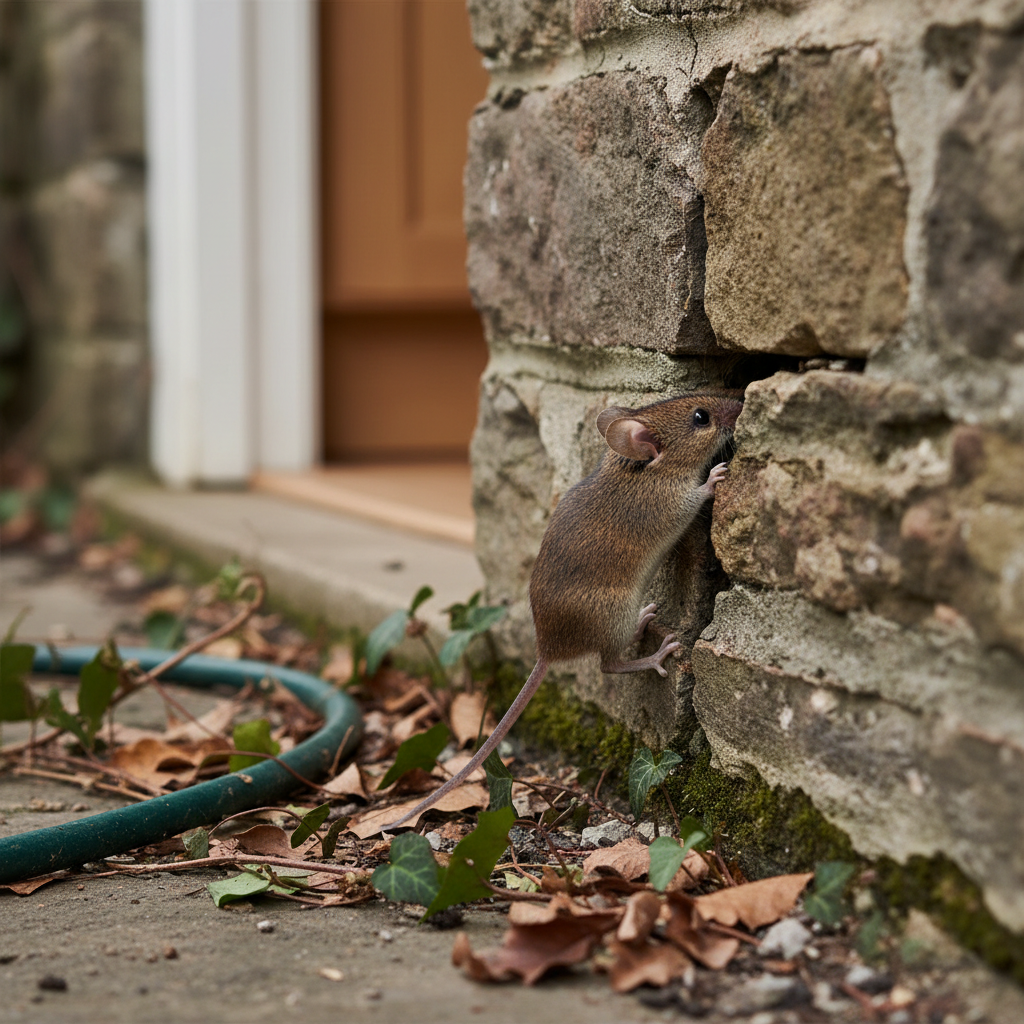
How Do Mice Get Into Your House?
A mouse can squeeze through a gap about the width of a pencil. The nine places mice get into New Jersey homes in the fall, and how to close them for good.
Most people find out they have mice the same way: droppings in a kitchen drawer, a chewed cereal box, or scratching in the ceiling at night. The next question is always the same. How did they get in? The doors are shut and the windows are closed.
The answer is that a house mouse doesn't need much room. Wildlife extension guides put it at any opening larger than about a quarter inch, roughly the width of a pencil. If its head fits, the rest of the body follows. Rats need about half an inch.
In New Jersey, mice start moving indoors in October and November as nights get cold and food outside dries up. Here's where they're usually getting in.
1. Gaps under garage doors
The rubber seal at the bottom of a garage door wears out, cracks or gets chewed. A worn corner is one of the easiest ways in. Once they're in the garage, the door into the house or the wall behind the water heater is next.
2. Where pipes and wires go through the wall
Look at where the gas line, AC lines, cable and outdoor faucets enter the house. The hole drilled for the pipe is almost always bigger than the pipe. That gap is a front door for mice.
3. Dryer vents
A dryer vent with a broken or missing flap is an open tunnel into the laundry room. Mice like the lint for nesting, too.
4. Foundation cracks and the sill plate
Where the wood frame of the house sits on the concrete foundation, small gaps open up over time. Check the outside of the foundation line, especially behind shrubs where you can't see it.
5. Crawl space vents and access doors
Crawl spaces are common in older Ocean County homes. A torn vent screen or a crawl space door that doesn't close tight gives mice a quiet, protected space right under the floor.
6. Roof lines and soffits
Mice climb better than people think. Gaps where the roof meets the soffit, or where gutters pull away from the fascia, let them into the attic.
7. Weep holes and vents in siding and brick
Small vent openings and gaps behind loose siding are easy access points, especially low on the wall.
8. Gaps around doors
If you can see daylight under an exterior door, a mouse can get under it. Check the corners of the door sweep.
9. Things you carry in
Boxes from the garage or shed, firewood, and bags of birdseed or pet food stored outside can all bring mice in with them.
How to close the gaps
For small holes, pack them tight with steel wool or copper mesh, then seal over it with caulk or patching compound. Mice chew through caulk, foam and plastic alone. For larger openings, cover them with 1/4-inch hardware cloth or sheet metal first. Replace worn door sweeps and garage door seals.
Our mouse-proofing guide goes through it room by room.
Signs mice are already inside
- Droppings about the size of a grain of rice, usually along walls, in drawers and under sinks (what mouse droppings look like)
- Scratching or scurrying in walls or ceilings at night
- Chewed food packaging or shredded paper
- A musty, ammonia smell in cabinets
When to call
If you're already seeing signs, sealing alone won't fix it, because you'll seal the mice in with you. The mice inside need to be removed, then the entry points closed. That's what our rodent control service does: find how they're getting in, deal with the ones inside, and seal the house. Call (732) 527-5770.
Common questions
Can mice come up through the toilet? Rats occasionally can. Mice almost never do. Look for gaps first.
Will mice leave on their own when it warms up? Rarely. A warm house with food is better than outside year-round.
How small a hole can a mouse fit through? About 1/4 inch. A rat needs about 1/2 inch.
Request a Pest Control Quote
Tell us what you're seeing and our team will call you to go over it. Most routine services are quoted over the phone. Termite work requires a paid inspection, and bed bug and roach jobs get a price range that's confirmed once we see the problem. New customers get 10% off their first service.
More Blogs
Some other blogs you might be interested in