
Spider Identification Guide: Easily Identify Spiders Around Your Home
Worried about the spiders you see in your home or garden? It's natural to wonder if they're harmless guests or a potential concern. Our comprehensive guide makes spider identification simple, helping you understand the common spider species found right outside your door or inside your living spaces. Learn how to spot different spiders, from the everyday house spiders and garden spiders to active wolf spiders, and important tips for identifying potentially dangerous black widows or brown recluse spiders. We cover key features like body shape, what to look for in their unique webs, and where they typically live, so you can confidently identify what you're seeing. Gain peace of mind knowing which spiders are beneficial, which to watch out for, and when it's time to consider professional spider control. With this knowledge, you'll be better equipped to protect your family and home.
Spotting the Difference: Your Guide to Identifying Common Spiders Around Your New Jersey Home
Spiders. Just the word can send shivers down some spines! While many of us have a natural dislike or even fear of these eight-legged creatures, the truth is, most spiders found around our homes are harmless and actually play a vital role in keeping other pesky insects in check. However, a few species can deliver a more concerning bite, and knowing the difference can give you immense peace of mind.
Here at Resolve Pest Management, we understand that an unexpected spider sighting can be unsettling. That's why we've put together this straightforward guide to help New Jersey homeowners like you become better at spider identification. We'll walk you through how to identify spiders, focusing on the common types you might encounter in Ocean, Monmouth, and Burlington Counties, so you can tell a harmless house guest from a pest that needs professional attention.
Why Does Spider Identification Matter for Homeowners?
Imagine finding a spider. Your first thought might be, "Is it dangerous?" For many, the impulse is to react quickly. But with a little knowledge about different spider species, you can replace fear with confidence. Understanding how to identify dangerous spiders versus beneficial ones allows you to:
- Reduce Unnecessary Worry: Most spiders are not a threat to people or pets. Knowing what you're looking at can calm your nerves.
- Take Appropriate Action: If you encounter a truly concerning spider, you'll know when it's time to be cautious or to call in the experts.
- Appreciate Nature's Pest Control: Many spiders are natural predators of flies, mosquitoes, and other common household pests.
The world of spiders is vast, with over 50,000 known spider species globally. While we won't cover them all, learning about the most common ones in our area is a great start.
How to Identify Spiders: Your Basic Detective Kit
You don't need to be an entomologist to get good at basic spider identification. With a few simple observations, you can often narrow down what kind of spider you're looking at. The best way to identify a spider species is to look at several features together.
When you spot a spider, try to notice:
- Body Shape and Size: Is it plump or slender? Large or small?
- Color and Markings: What colors do you see? Are there any distinct patterns, stripes, or spots? Remember, color can sometimes vary even within the same species.
- Legs: Are they long and thin, or short and stout? Is the spider hairy or smooth?
- Web Type: Does it make webs? If so, what kind? Is it a messy tangle, a classic wheel-shaped orb, or a flat sheet?
- Behavior: Is it actively running and hunting, or sitting still in a web?
Always observe safely, perhaps from a distance or by using a clear container to get a closer look without direct contact. A good, clear photo can also be incredibly helpful for identification.
Common House Spiders in Your New Jersey Home
Let's dive into some of the most frequently encountered spiders you'll find when you identify spiders in your house or yard here in New Jersey. Most of these are harmless helpers!
American House Spider (Parasteatoda tepidariorum)
These are arguably the most common house spiders.
- Look For: Small, usually brownish or grayish, with a somewhat rounded, patterned abdomen. They have relatively long, thin legs.
- Webs: They build messy, irregular, tangled webs, often in corners, under furniture, or in basements and garages. These are often called "cobwebs."
- Where They Live: Indoors, in undisturbed areas.
- Danger Level: Very low. Their bites are rare and usually cause only mild irritation.
Cellar Spiders (Pholcidae Family)
Also known as "daddy long-legs" (though they are not true daddy long-legs, which are harvestmen), these spiders are easily recognizable.
- Look For: Very long, thin, fragile legs with a small, often cylindrical body. They usually have a grayish or pale brown color.
- Webs: They create loose, messy, tangled webs in damp, dark areas like basements, crawl spaces, and corners of rooms.
- Where They Live: Basements, garages, eaves, sheds.
- Danger Level: Very low. They are harmless to humans.
Jumping Spiders (Salticidae Family)
These fascinating spiders are a favorite for many due to their distinctive appearance and behavior. The Salticidae family is one of the largest spider families.
- How to identify jumping spiders:
- Look For: Small to medium-sized, compact, often fuzzy bodies with short, stout legs. They come in various colors and often have iridescent markings. The most defining feature is their large, forward-facing eyes, giving them an almost curious or "watchful" expression.
- Webs: They don't typically build large capture webs but might create small silk retreats for resting or laying eggs.
- Behavior: They are active hunters, known for their jerky, stop-and-go movements and incredible ability to jump long distances to catch prey. You'll often see them on walls, windows, and plants.
- Where They Live: Indoors and outdoors, on vertical surfaces.
- Danger Level: Very low. They are generally harmless and would only bite if seriously provoked, causing a minor sting.
Wolf Spiders (Lycosidae Family)
When people ask, "How to identify wolf spiders?", they often refer to a common, larger ground-dwelling spider.
- Look For: Medium to large-sized, robust, hairy bodies, usually gray, brown, or black with darker stripes or patterns. They have long, strong legs built for running. A key identification feature is their eye arrangement: eight eyes arranged in three rows, with two very prominent large eyes in the middle row.
- Webs: Unlike many spiders, wolf spiders do not build webs to catch prey. They are active hunters that chase down their meals.
- Behavior: You'll often see them scurrying across floors, especially at night, or hiding under rocks and leaf litter outdoors. They are very fast.
- Where They Live: Ground level, under leaf litter, rocks, woodpiles outdoors. They sometimes wander indoors.
- Danger Level: Low. Their bite can be painful but is not considered medically significant for most people, similar to a bee sting.
Orb Weaver Spiders
These spiders are the architects of the garden! Many homeowners appreciate their intricate creations. When considering a garden spider, this is often what comes to mind.
- Look For: Often have a large, rounded abdomen, sometimes with bright colors or distinct patterns. Sizes vary greatly.
- Webs: They build the classic, wheel-shaped, circular webs you often see suspended between branches, eaves, or other structures, especially in gardens.
- Where They Live: Outdoors, in gardens, shrubs, porches, and near outdoor lights.
- Danger Level: Very low. They are harmless and beautiful additions to your yard's ecosystem.
Identifying Potentially Dangerous Spiders in New Jersey
While most spiders are harmless, it's wise to know about the few that can pose a greater concern. When considering how to identify poisonous spiders or how to identify venomous spiders, remember that all spiders are venomous, but only a few have venom strong enough to affect humans significantly. In New Jersey, the truly dangerous spiders are rare, but it’s still good to be aware.
Black Widow Spiders (Latrodectus mactans)
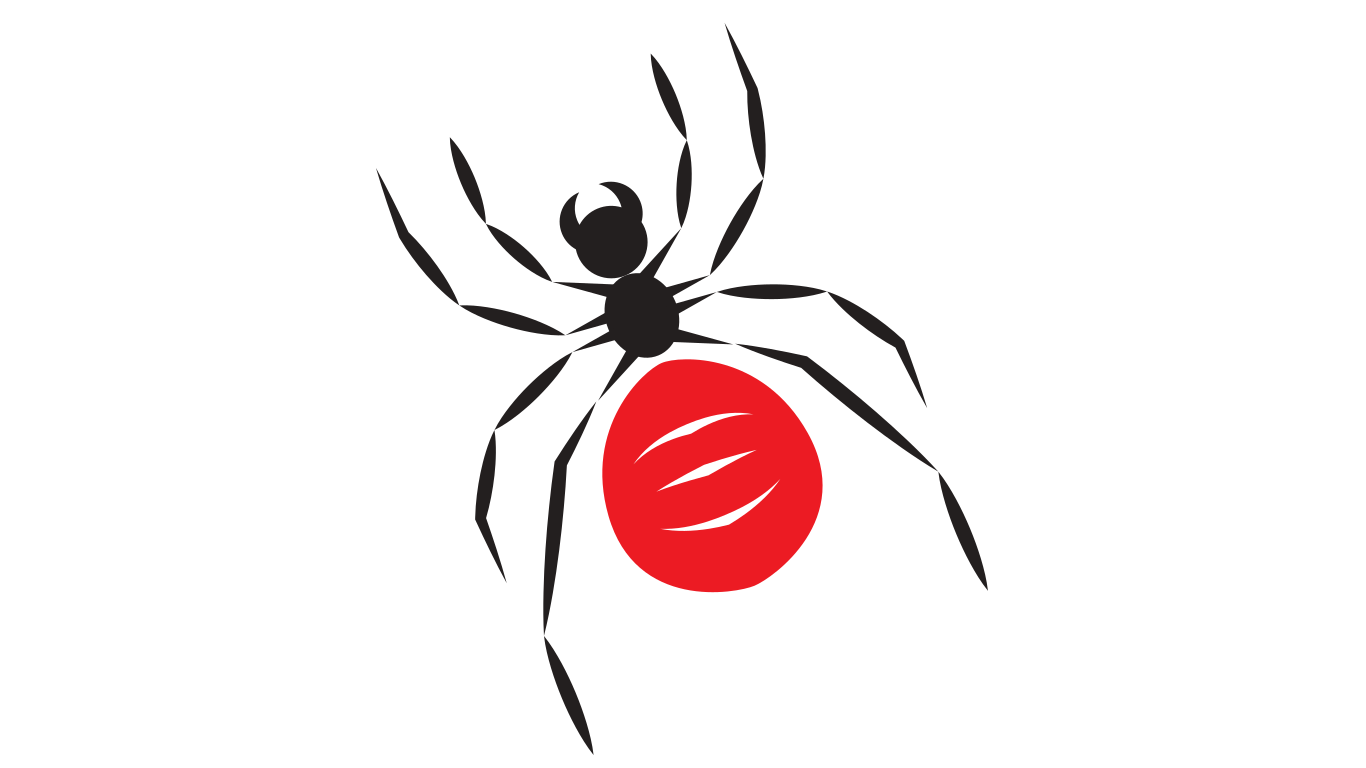
This is one of the most well-known dangerous spiders. How to identify black widow spiders?
- Look For: The female black widow is typically shiny black with a distinct red or orange hourglass shape on the underside of her rounded abdomen. Males are smaller, lighter in color, and have less prominent markings.
- Webs: They build irregular, messy, strong, tangled webs, often close to the ground, in dark, undisturbed areas like woodpiles, sheds, crawl spaces, and under outdoor furniture.
- Where They Live: Primarily outdoors in sheltered areas, but can occasionally wander indoors.
- Danger Level: Moderate to high. Their bite can be painful and cause muscle cramps, nausea, and other systemic symptoms. Medical attention is recommended if bitten. However, bites are rare, as they are shy and non-aggressive.
Brown Recluse Spiders (Loxosceles reclusa)
Many people worry about brown recluse spiders, and for good reason, as their bites can be serious. However, it's crucial to understand their distribution.
- How to identify brown recluse spiders? And how to identify brown spiders?
- Look For: A small to medium-sized, yellowish-brown to dark brown spider with a distinctive violin-shaped marking on its back (cephalothorax). It also has only six eyes arranged in pairs, rather than the usual eight eyes of most spiders.
- Webs: They build small, irregular, off-white webs used as retreats, not for trapping prey.
- Where They Live: They prefer dark, undisturbed areas like attics, basements, closets, and storage boxes.
- Danger Level: Moderate. Their bite can sometimes lead to an open sore that heals slowly.
- Important Note for New Jersey: True brown recluse sightings in New Jersey are extremely rare. Most reported "brown recluse" bites in our region are actually caused by other spiders or unrelated skin conditions. If you think you've seen one, try to get a clear photo for an expert to identify.
Yellow Sac Spiders (Cheiracanthium inclusum / mildei)
These spiders are more common than black widows in homes and can be responsible for many spider bites attributed to other species.
- Look For: Small (about 1/4 to 3/8 inch), pale yellow to greenish-yellow body with slightly darker markings on the abdomen. Their legs are often darker at the tips. They have a shiny appearance.
- Webs: They don't build typical capture webs but create silk "sacs" or tubes in corners, under leaves, or in tight spaces where they hide during the day.
- Where They Live: Indoors (especially in ceilings, wall corners, and behind pictures) and outdoors (in gardens, under bark).
- Danger Level: Low to moderate. Their bite is usually painful, like a bee sting, and can cause redness, swelling, and sometimes a small blister. Serious reactions are uncommon.
Beyond the Basics: Key Features for Deeper Identification
To get even better at telling the spider species apart, consider these additional details:
- Eye Arrangement: While hard to see without magnification, the pattern of a spider's eyes is a definitive identification tool. For instance, wolf spiders have two large eyes at the top and four smaller ones below, while jumping spiders (Salticidae) have very large front eyes.
- Web Type and Location (How to identify spiders by their webs?):
- Orb Webs: Classic, wheel-shaped, sticky webs usually found outdoors in gardens (Orb Weavers).
- Tangled/Cobwebs: Messy, irregular, non-sticky webs, often in corners, basements, or sheds (American House Spiders, Cellar Spiders, Black Widows).
- Sheet Webs: Flat sheets of silk, sometimes with a funnel retreat (Sheetweb Weavers, Funnel Weavers).
- No Web: Spiders that actively hunt, like wolf spiders and jumping spiders, don't build capture webs.
What to Do After You Identify a Spider on Your Property?
Once you've done your best spider identification, your next steps depend on what you've found:
- Harmless Spiders (Most Common): If it's a common house spider, cellar spider, jumping spider, or orb weaver, you can usually leave it alone to continue its pest control duties. If it's in an inconvenient spot, gently scoop it up and release it outside.
- Potentially Concerning Spiders (Black Widow, Yellow Sac): If you suspect you've found one of these, avoid direct contact. If you're bitten, clean the bite site and monitor your symptoms. Seek medical attention for severe reactions or if you're concerned.
- Unidentified or Persistent Problem: If you can't tell what kind of spider it is, or if you're seeing many spiders and it's causing distress, it's time to call in the professionals.
When Is It Time to Call Resolve Pest Management for Spider Control?
While basic spider identification can empower you, there are times when professional help is the best solution. Don't hesitate to reach out to Resolve Pest Management if:
- You're Overwhelmed: You're seeing more spiders than you're comfortable with, or you find multiple egg sacs.
- You Suspect Dangerous Spiders: You've identified or strongly suspect a black widow, or you're simply not sure and need peace of mind. Our team has the expertise to correctly identify spider species and handle them safely.
- You Have Ongoing Bites: If someone in your home is experiencing bites and you can't determine the cause.
- You Want Prevention: You want to make your home less attractive to spiders and other pests.
At Resolve Pest Management, we're proud to be a locally owned and operated pest control company based right here in Bayville, NJ. We specialize in providing safe and effective spider control services across Ocean County, Monmouth County, and Burlington County. Our family-owned team is guided by the S.T.I.N.G. promise: Service, Trust, Initiative, Nurture, and Grit.
When you contact us for spider identification or control, you can expect:
- Expert Identification: Our skilled technicians can accurately identify spider species and assess the situation.
- Targeted Removal: We use safe and effective methods to remove spiders and their webs.
- Prevention Strategies: We'll help you seal entry points and reduce conditions that attract spiders, offering proactive solutions like our Seasonal Pest Protection Plans.
- Rapid Scheduling & Reliability: We offer fast scheduling and stand behind our work with a 100 percent satisfaction guarantee. For emergencies, we even provide 24-hour emergency pest control.
Don't let fear of the unknown keep you from enjoying your home. With a little knowledge and the trusted support of Resolve Pest Management, you can confidently manage any spider situation that comes your way. If you have questions or need assistance, give us a call at (732) 527-5770 or visit our website to learn more about our comprehensive pest control services. We're here to help you resolve your pest problems, big or small!
Get Your Free Pest Control Quote Today!
Ready to get rid of pests? Fill out this short form to receive a free, no-obligation quote from Resolve Pest Management, your trusted local experts in Bayville, NJ. Tell us about your pest problem, and we'll call you back quickly with a personalized solution and pricing. Say goodbye to unwanted guests and hello to a pest-free home!
More Blogs
Some other blogs you might be interested in