New Jersey Rodent Identification Guide: Know Your Pests, Protect Your Home
Is that a rat, a mouse, or a vole? For New Jersey homeowners and businesses, knowing which rodent you're dealing with is key to effective pest control. Our easy-to-understand guide helps you identify common local rodents like Norway rats, roof rats, house mice, and voles by their unique signs – from droppings and gnaw marks to nests and sounds. Learn smart prevention tips and when to call the experts at Resolve Pest Management for tailored solutions in Ocean & Monmouth Counties.
Unmasking Your Unwanted Guests: A New Jersey Homeowner's Guide to Rodent Identification
Finding signs of rodents can be unsettling for any homeowner or business owner in New Jersey. Are those tiny droppings from a mouse, or do you have a more serious rat problem? Knowing exactly which type of rodent has invaded your property isn't just about curiosity—it's the first step towards a faster, smarter, and more effective solution.
This practical guide from Resolve Pest Management will help you identify the common rodent species found in Ocean and Monmouth Counties, giving you the power to understand the problem and take the right steps. From their tell-tale droppings to their unique behaviors and nesting habits, we'll break down the clues so you can act confidently. Identifying the species narrows down your treatment options, lowers potential disease risks, and helps you decide if it's time for a professional pest control inspection.
Let's dive in and learn how to become a rodent detective!
Why Does Knowing Your Rodent Matter?
Imagine trying to catch a fish with bait meant for a bird. That's essentially what happens when you try to tackle a rodent problem without knowing the species. Different rodents respond to different traps, baits, and exclusion methods. A house mouse can squeeze through a gap the size of a dime, while a rat needs a larger opening. Their diets, breeding cycles, and habits also vary, all impacting how quickly and efficiently you can get rid of them.
Proper identification helps you:
- Act Faster: Knowing the species helps you target your initial efforts more effectively.
- Choose Smarter Solutions: From trap placement to exclusion materials, specific rodents require specific approaches.
- Reduce Health Risks: Some rodents carry more serious diseases than others. Early and accurate identification helps you understand potential health hazards.
- Save Time & Money: Avoid wasting resources on methods that won't work for your particular pest.
The Usual Suspects: Common Rodent Types in New Jersey
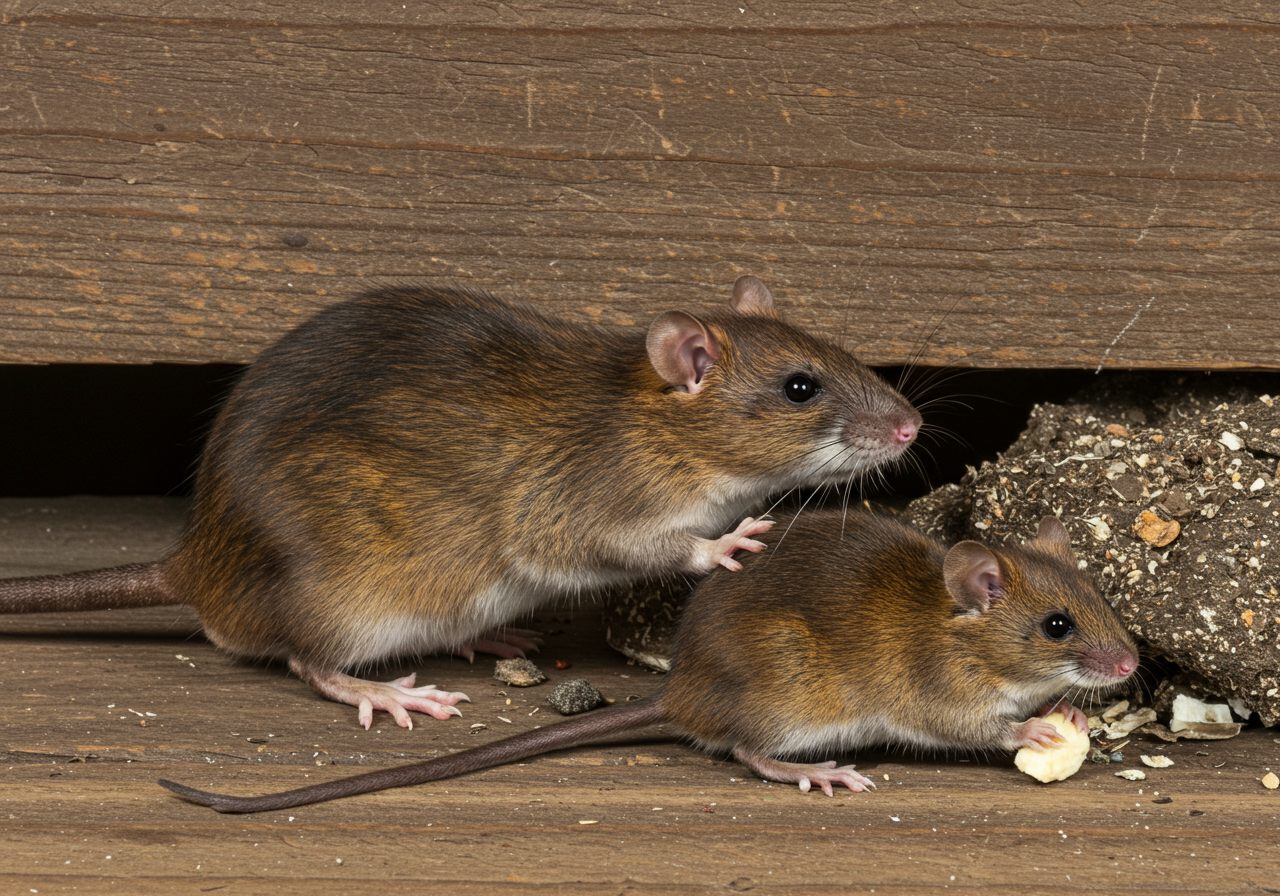
In our coastal and suburban communities across New Jersey, homeowners and businesses often encounter four main types of rodents: Norway rats, roof rats, house mice, and voles. While they all fall under the "rodent" umbrella, each has distinct features and behaviors that help with identification.
Their size, tail length, ear shape, and preferred hangout spots are key clues. For example, Norway rats are ground-dwellers that love to burrow, while roof rats prefer to climb into attics. House mice are tiny invaders that get into almost anything, and voles are often mistaken for mice but cause damage primarily outdoors.
Understanding these patterns speeds up effective control and helps you anticipate health risks—some rodents can carry diseases like Hantavirus (especially field rodents like voles), so take any signs seriously.
How to Recognize Norway Rats: Key Characteristics and Habits
Norway rats, sometimes called "sewer rats" or "brown rats," are the largest of the common rat species you'll find.
- Appearance: They are large and heavy-bodied, typically 7-10 inches long (not including the tail). They have blunt snouts, small eyes, and small ears relative to their head size. Their tails are shorter than their head and body combined, scaly, and dark on top, lighter underneath. Their fur is coarse, brownish-gray.
- Habitat: Norway rats are ground-oriented. They love to burrow in soil, especially near foundations, under concrete slabs, in overgrown areas, and around trash bins. You'll often find their tunnels in basements, crawl spaces, and lower levels of buildings.
- Signs of Infestation:
- Droppings: Large, capsule-shaped, about 3/4 to 1 inch long, often found in clusters near their burrows, food sources, or along their travel paths.
- Gnawing: They can gnaw through tough materials like wood, plastic, and even concrete to create or enlarge entry points. Look for significant chew marks around foundation vents, pipes, and utility lines.
- Burrows & Runways: Visible burrows (holes in the ground) near foundations, compost piles, or trash areas. They create worn paths or "runways" in lawns or dirt as they travel repeatedly between their nest and food sources.
Quick Note: Because Norway rats stick to the ground, the clues they leave will be different from the climbing roof rats. If you find soil mounds or tunnels by a foundation in New Jersey, it's a strong indicator of Norway rats.
The Elusive Roof Rat: High Climbers of NJ Properties
Roof rats, also known as "black rats" or "ship rats," are more agile climbers than their Norway rat cousins.
- Appearance: They are sleeker and smaller than Norway rats, typically 6-8 inches long (not including the tail). They have pointier snouts, larger eyes, and larger ears. Their most distinctive feature is their tail, which is uniformly dark and longer than their head and body combined. Their fur is smooth, ranging from black to brownish-gray.
- Habitat: True to their name, roof rats prefer elevated locations. You'll find them in attics, rafters, false ceilings, trees, and dense shrubbery. They are excellent climbers and will use wires, pipes, and branches to access upper parts of buildings.
- Signs of Infestation:
- Droppings: Smaller and more slender than Norway rat droppings, about 1/2 inch long, often found in attics, high shelves, or along beams.
- Gnawing: Similar to Norway rats, they gnaw on wood, wiring, and pipes, but these marks will be found in higher locations.
- Nests: Look for nests made of shredded paper, insulation, and other fibrous materials in attics, wall voids, or even hollow trees.
Tiny Invaders: What to Know About House Mice
House mice are the most common rodent pest in homes and businesses, known for their small size and rapid breeding.
- Appearance: Small, slender bodies, typically 2.5-4 inches long (body length). They have relatively large ears, small eyes, and a pointed snout. Their tail is sparsely haired and about the same length as their head and body combined. Fur color ranges from light gray to brown.
- Habitat: House mice are incredibly adaptable and can live almost anywhere humans do. They prefer to nest in dark, secluded areas close to food sources, such as wall voids, behind appliances, in cluttered storage areas, and inside cardboard boxes.
- Signs of Infestation:
- Droppings: Tiny, rice-grain-sized pellets, about 1/8 to 1/4 inch long, usually pointed at both ends. They are often found in large quantities, especially in food storage areas, drawers, or under sinks.
- Gnawing: Small, fine chew marks on food packaging, electrical wires, plastic, and fabrics.
- Nests: Small, ball-shaped nests made of shredded paper, fabric, insulation, or other soft materials.
- Squeaks & Scratches: You might hear them scurrying or scratching inside walls or ceilings.
Because they fit through very small gaps (as small as a quarter-inch!) and breed incredibly quickly, finding mouse-sized droppings or chewed packaging usually means an active colony.
The Garden Pest: Understanding Voles
Often mistaken for mice, voles are primarily outdoor rodents that can cause significant damage to landscaping.
- Appearance: Voles have stocky bodies, short legs, and short tails (much shorter than their body length). They have small eyes and ears that are often hidden by their fur. Their fur is dense and usually dark brown or gray. They are typically 5-8 inches long.
- Habitat: Voles are active burrowers and live in grassy areas, gardens, and lawns. They create elaborate tunnel systems just below the surface, often leaving visible "runways" or paths in the grass.
- Signs of Infestation:
- Droppings: Small, cylindrical, and often greenish or dark brown, resembling small pellets. They are typically found near their runways or burrow entrances.
- Runways: Surface runways in the grass, about 1-2 inches wide, where vegetation has been chewed down to the soil.
- Gnawing on Plants: They feed on the roots, bulbs, and bark of plants, often girdling trees or shrubs at ground level.
- Entry Holes: Small, numerous burrow entrances without accompanying soil mounds (unlike moles).
Voles rarely enter homes but can devastate lawns and gardens in Ocean and Monmouth Counties.
Quick Comparison: Rats vs. Mice
Sometimes it's hard to tell if you're dealing with a rat or a mouse, especially if you only catch a glimpse or find small droppings. Here's a quick checklist to help:
| Trait | Mouse | Rat (Norway & Roof) |
|---|---|---|
| Size | Small (2.5-4 inches body) | Much larger (6-10 inches body) |
| Droppings | Tiny, rice-grain size (1/8-1/4 inch) | Larger, capsule-shaped (1/2-1 inch) |
| Tail Length | About equal to head + body | Norway: Shorter than head + body; Roof: Longer |
| Ear Size | Proportionally large | Smaller (Norway); Larger (Roof) |
| Snout Shape | Pointed | Blunt (Norway); Pointed (Roof) |
These quick distinctions are especially helpful when you find small droppings or hear noises but can't get a clear visual of the pest.
Red Flag Infestation Signs: When to Act Immediately
Beyond simply identifying the species, understanding the common signs of an active infestation helps you gauge the urgency of the situation. Look for:
- Droppings: Fresh droppings (soft and dark) indicate current activity. Older droppings (hard and lighter) suggest a past problem or a declining one. The sheer quantity can indicate the size of the colony.
- Gnaw Marks: Fresh gnaw marks appear lighter in color where the material has been newly exposed. If they are darker or dusty, they might be older.
- Nests: Active nests often contain live rodents, fresh droppings, and are made of recently collected materials.
- Sounds: Scratching, gnawing, and scurrying noises, especially at night, are classic signs of active rodents. These sounds are often heard in attics, walls, basements, or crawl spaces.
- Musky Odor: A distinct, stale, ammonia-like smell, particularly in enclosed areas like pantries, closets, or basements, can indicate a long-standing and significant rodent presence due to accumulated urine and droppings.
Early detection reduces potential damage to your property and lowers the risk of disease transmission. If you observe any of these "red flag" signs, it's wise to consider professional help.
Targeted Prevention: Keeping Rodents Away from Your NJ Property
The best way to deal with rodents is to prevent them from becoming a problem in the first place. Good prevention involves a three-pronged approach: sealing entry points, improving sanitation, and smart landscaping.
Sealing Entry Points: Your First Line of Defense
Rodents are masters at finding their way inside.
- Small Gaps, Big Problems: Mice can enter through openings as small as 1/4 inch (the size of a dime!), while rats need about 1/2 inch (the size of a quarter).
- Key Areas to Inspect: Focus on foundation cracks, gaps around utility lines (pipes, wires), dryer vents, attic vents, and poorly sealed doors or windows.
- Durable Materials: Use materials rodents can't easily chew through. This includes galvanized steel mesh, hardware cloth, concrete, or copper mesh. Avoid using plastic, wood, or caulk alone for larger gaps, as rodents can easily chew through them.
- Daylight Inspection: Use a flashlight during daylight hours to look for light peeking through gaps around your home's exterior.
For major foundation voids, complicated attic penetrations, or extensive sealing needs, hiring professionals ensures a thorough, long-lasting, and airtight seal.
Sanitation & Storage: Eliminate Food & Water Sources
Rodents are always looking for food, water, and shelter. Make your property less appealing by:
- Food Storage: Store all food, including pet food, in sealed, airtight containers made of glass or metal.
- Waste Management: Use trash cans with tight-fitting lids, both indoors and outdoors. Regularly empty indoor trash.
- Cleanliness: Clean up food spills and crumbs immediately. Don't leave pet food or water bowls out overnight.
- Clutter Control: Reduce clutter in basements, attics, and garages, as these provide excellent hiding and nesting spots.
Landscaping Adjustments: Remove Outdoor Shelters
Your outdoor environment can either invite or deter rodents.
- Trim Vegetation: Keep shrubs, bushes, and tree branches trimmed away from your home's exterior. Overhanging branches can provide roof rats with direct access to your roof and attic.
- Short Grass: Keep your lawn mowed short to reduce cover for voles and other ground-dwelling rodents.
- Move Woodpiles & Compost: Store firewood, compost bins, and other debris several feet away from your home's foundation. These are prime nesting spots for rats and voles.
- Address Water Sources: Fix leaky outdoor faucets and ensure proper drainage to eliminate standing water.
These prevention steps significantly reduce the chances of a rodent infestation and complement any professional exclusion work.
When to Call the Experts: Resolve Pest Management is Here to Help
Identifying a rodent problem is a great start, but tackling an active infestation often requires professional expertise. If you've found fresh droppings, new gnaw marks, or hear persistent nighttime noises, it’s a clear signal that it's time to bring in the pros.
Resolve Pest Management specializes in Rodent Control for homeowners and businesses across Ocean and Monmouth Counties, NJ. Our team is trained to:
- Confirm Identification: Accurately identify the specific rodent species.
- Assess Infestation Level: Determine the scope and severity of the problem.
- Identify Entry Points: Locate all possible access points.
- Implement Targeted Solutions: Apply species-specific treatments, which might include trapping, baiting (such as our Exterior Rodent Bait Stations service), and exclusion work.
- Provide Prevention Strategies: Offer tailored advice to prevent future infestations.
We understand the unique challenges faced by properties in our coastal and suburban communities. Our local experts are ready to provide prompt, effective solutions with our S.T.I.N.G. promise – Service, Trust, Initiative, Nurture, and Grit – guiding every interaction.
Don't let rodents take over your New Jersey home or business. If you suspect a rodent problem, contact Resolve Pest Management today to schedule an inspection and get a customized action plan. We're available 24/7 for emergency pest control needs. Call us at (732) 527-5770 or visit our website to learn more about our comprehensive pest control services in Toms River, Brick, Howell, Middletown, and surrounding areas.
Get a Free Pest Control Quote | Resolve Pest Management in Bayville, NJ
Worried about pests in your Bayville, NJ home? Whether it's ants, spiders, rodents, or anything else, Resolve Pest Management is here to help. Fill out our simple form with your details, and one of our local pest experts will quickly get in touch to provide a personalized, no-obligation quote. Let us help you protect your home and bring back your peace of mind with effective, reliable pest control solutions. Get started today!
More Blogs
Some other blogs you might be interested in